If you spend time texting, scrolling through social media, or chatting online, you’ve probably seen someone suddenly type “GTG” before disappearing from the conversation. For many people, especially those new to internet slang, it can feel confusing at first.
Does it mean someone is angry? Busy? Ending the conversation forever?
The truth is much simpler.
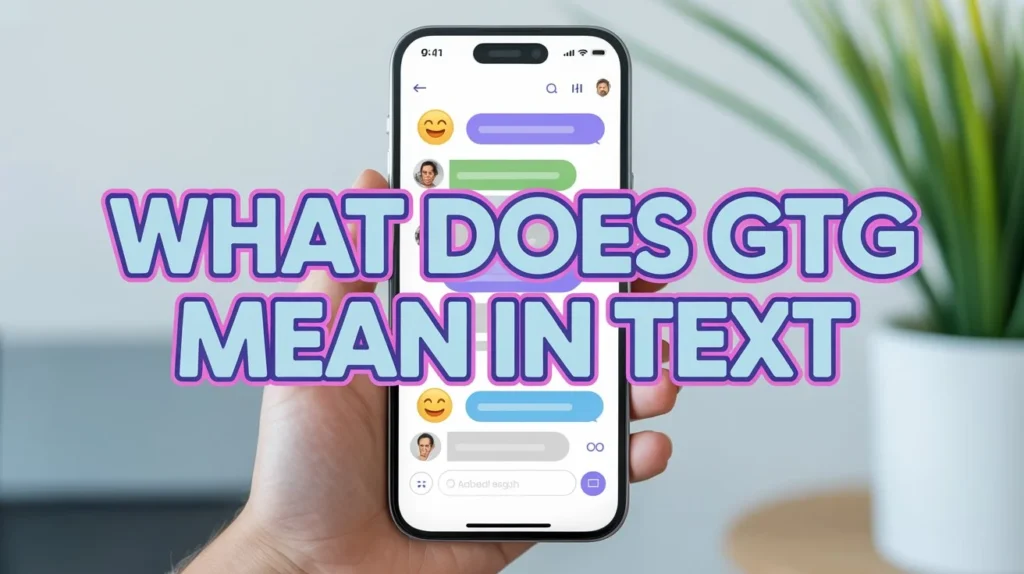
“GTG” is one of the most common abbreviations used in digital communication. It appears in text messages, WhatsApp chats, Instagram DMs, gaming conversations, and even workplace messaging apps. People use it because it’s quick, casual, and easy to understand once you know the meaning.
In this article, you’ll learn exactly what GTG means in text, where it came from, how people use it emotionally, when you should avoid it, and how it fits into modern online communication culture.
GTG – Quick Meaning
GTG usually means:
“Got To Go”
Sometimes, people also use it to mean:
“Good To Go”
The meaning depends entirely on the conversation context.
Most Common Meaning: “Got To Go”
People use it when they need to leave a conversation quickly.
Quick Examples
- “Sorry, my mom’s calling. GTG.”
- “GTG, talk later!”
- “I have class in 5 mins, gtg.”
Alternative Meaning: “Good To Go”
Less commonly, GTG can also mean something is ready or approved.
Example:
- “The project is finished and GTG.”
In everyday texting, though, “Got To Go” is far more common.
Origin & Background of GTG
GTG became popular during the early internet chatroom era in the late 1990s and early 2000s. Back then, people used slow keyboards, dial-up internet, and limited messaging space. Short abbreviations made online communication faster and easier.
Just like:
- BRB = Be Right Back
- LOL = Laugh Out Loud
- TTYL = Talk To You Later
GTG emerged as a practical shortcut.
As instant messaging platforms like MSN Messenger, AOL Instant Messenger, and Yahoo Chat grew, abbreviations became part of internet culture. Later, smartphones and texting apps pushed them even further into mainstream communication.
Social media transformed GTG from a simple shortcut into a social habit.
Today, people use GTG almost instinctively. It’s no longer just efficient language — it signals social awareness, politeness, and emotional tone.
Interestingly, younger generations often type it in lowercase (“gtg”) because lowercase texting feels softer and more casual emotionally.
Real-Life Conversations
WhatsApp Conversation
Person A:
Are we still meeting tonight?
Person B:
Yeah probably around 8.
Person A:
Perfect.
Person B:
GTG rn though, driving home.
Instagram DM
Person A:
That reel was literally you 😂
Person B:
Stop exposing me.
Person A:
Never.
Person B:
gtg before my battery dies lol
TikTok Comments
Person A:
Why is everyone awake at 3 AM?
Person B:
Existential crisis hours.
Person A:
Real.
Person B:
Okay gtg my alarm rings in 4 hours 😭
Text Message
Person A:
Can we talk later?
Person B:
Yeah of course.
Person A:
Everything okay?
Person B:
Just overwhelmed today. GTG for now.
This example shows how GTG can sometimes carry emotional weight beyond simply leaving a conversation.
Emotional & Psychological Meaning
At first glance, GTG seems purely practical. But emotionally, it does more than end conversations.
It softens exits.
Instead of disappearing abruptly, people use GTG to acknowledge the other person respectfully. It communicates:
- “I’m leaving, but I’m not ignoring you.”
- “The conversation matters to me.”
- “I need to go, not avoid you.”
That emotional subtlety matters in digital communication where tone is often hard to read.
In close friendships, “gtg” can feel warm and casual.
In tense conversations, however, it can feel dismissive or emotionally distant depending on timing.
A Real-Life Style Scenario
Imagine texting a friend late at night during a stressful week. The conversation becomes emotionally heavy. Suddenly they say:
“I’m exhausted. gtg for tonight.”
You probably wouldn’t interpret that as rude. Instead, it feels human. Honest. Gentle.
That’s part of why abbreviations like GTG survive despite changing internet trends. They communicate emotion efficiently.
Usage in Different Contexts
Social Media
On platforms like TikTok, Snapchat, Instagram, and Discord, GTG is extremely common.
People use it to:
- Leave conversations
- End livestream chats
- Exit gaming sessions
- Pause online interactions
It keeps communication fast and informal.
Friends & Relationships
Among friends, GTG usually sounds relaxed and friendly.
Examples:
- “gtg eat dinner”
- “GTG my dad’s yelling”
- “okay gtg love you”
In relationships, tone matters more.
A quick “gtg” during an emotional conversation can sometimes feel cold if there’s no explanation attached.
Work & Professional Settings
GTG is less appropriate in formal workplaces.
Instead of:
- “GTG”
Professional alternatives include:
- “I need to step away.”
- “I have to leave for another meeting.”
- “Talk soon.”
However, in casual remote teams or gaming-related industries, GTG may still appear in internal chats.
Casual vs Serious Tone
Casual Tone
- “gtg bye”
- “okay gtg ttyl”
Serious Tone
- “I really need some space right now. GTG.”
The abbreviation itself stays the same, but emotional interpretation changes based on context.
When NOT to Use It
There are situations where GTG may create confusion or appear disrespectful.
Formal Emails
Never use GTG in:
- Job applications
- Academic writing
- Client communication
- Official business emails
It can appear unprofessional.
Sensitive Conversations
If someone is sharing emotional pain, abruptly saying “GTG” may feel dismissive.
Better alternatives:
- “I need to go for now, but we’ll talk later.”
- “I’m sorry, I have to leave, but I care about this conversation.”
Cross-Generational Communication
Older adults unfamiliar with internet slang may not understand GTG immediately.
In those situations, plain language works better.
Common Misunderstandings
Confusing “Got To Go” With “Good To Go”
This is the biggest misunderstanding.
Example 1
- “GTG, bye.”
= Got To Go
Example 2
- “The files are GTG.”
= Good To Go
Context changes everything.
Thinking It Sounds Rude
Some people interpret short abbreviations as emotionally cold.
But among younger internet users, GTG usually feels neutral or polite.
Assuming It Means Anger
A sudden “gtg” can sometimes make people worry they upset someone.
Usually, though, it simply means the person genuinely needs to leave.
Comparison Table
| Phrase | Meaning | Intent |
| What does GTG mean in text | “Got To Go” or “Good To Go” | Definition intent |
| How to use GTG | Ending chats or confirming readiness | Usage intent |
| Examples of GTG | “GTG, talk later” | Example intent |
| GTG vs BRB | GTG means leaving entirely, BRB means returning soon | Comparison intent |
| GTG vs TTYL | GTG focuses on leaving; TTYL focuses on future conversation | Comparison intent |
Key Insight
GTG is more than shorthand. It reflects how digital communication balances speed, politeness, and emotional efficiency in modern online culture.
Variations & Related Slang
GTG meaning
The abbreviation most commonly means “Got To Go.”
GTG in text
Used in texting to quickly exit conversations.
GTG abbreviation
A short internet slang form used in chats and messaging apps.
GTG slang
Part of modern online communication culture.
GTG in chat
Frequently used in gaming chats, livestreams, and social media messaging.
G2G meaning
A variation where the number “2” replaces “to.”
G2G in text
Popular among gamers and younger texters.
GTFO meaning
A much harsher slang phrase meaning “Get The F*** Out.”
BRB meaning
“Be Right Back,” implying temporary absence.
TTYL meaning
“Talk To You Later,” often used alongside GTG.
How to Respond When Someone Uses It
Casual Replies
- “Okay, talk later!”
- “No worries.”
- “See ya!”
Funny Replies
- “Don’t forget us when you become famous.”
- “Fine, abandon me then 😂”
- “Mission accepted. Goodbye soldier.”
Mature Replies
- “Take care.”
- “Hope everything’s okay.”
- “We’ll continue later.”
Respectful Replies
- “Thanks for chatting.”
- “Have a good day.”
- “Talk soon.”
Regional & Cultural Usage
Western Culture
In the US, UK, and Canada, GTG is extremely common in casual texting culture. It’s viewed as friendly and efficient.
Asian Culture
In many Asian countries, younger internet users understand GTG well due to global social media exposure. However, older generations may prefer complete sentences.
Middle Eastern Culture
GTG is widely recognized among bilingual internet users, especially younger audiences active on gaming and social media platforms.
Still, culturally warmer communication styles sometimes encourage adding extra politeness:
- “GTG, take care.”
- “GTG, speak later inshallah.”
Global Internet Usage
Because internet slang crosses borders quickly, GTG has become nearly universal among online users under 35.
Generational Differences
Gen Z
Uses “gtg” casually and frequently, often lowercase.
Millennials
Still use GTG, especially from early texting culture.
Older Generations
May understand it less or interpret it as abrupt.
Is It Safe for Kids?
Yes, GTG is generally safe for kids.
It’s considered harmless internet slang and usually just means:
- “Got To Go”
Parents should still encourage children to understand context because abbreviations can carry different meanings depending on conversations and online environments.
Discover More Post
- What Does THX Mean In Text? The Real Meaning Behind This Everyday Slang
- What Does WSG Mean In A Text? The Real Meaning Behind This Trending Slang
- What Does OTP Mean In Text From A Guy? The Real Meaning Behind This Popular Slang
- What Does BR Mean In Text? The Hidden Meaning Behind This Common Slang
- What Does BMF Mean In Text? The Real Meaning Behind This Popular Slang
FAQs
What does GTG mean from a girl?
Usually the same thing it means from anyone else:
“Got To Go.”
Tone depends more on context than gender.
Is GTG rude?
Not usually.
Among friends and online users, it’s considered normal and polite enough for casual conversations.
What is the difference between GTG and BRB?
GTG suggests leaving the conversation entirely.
BRB suggests returning soon.
Does GTG always mean “Got To Go”?
No.
Sometimes it means “Good To Go,” especially in work or task-related conversations.
Is GTG outdated?
Not at all.
Even though internet slang changes constantly, GTG remains widely used because it’s simple and practical.
Can adults use GTG?
Absolutely.
People of all ages use it in casual digital communication.
Should I use GTG in professional emails?
Generally no.
Use complete professional sentences instead.
Conclusion
GTG may look like a tiny abbreviation, but it reflects something bigger about modern communication.
People want conversations to feel fast, effortless, and emotionally smooth. GTG helps create that balance. It lets someone leave respectfully without writing a long explanation every time.
Whether you see it in a WhatsApp chat, TikT*k comment, Instagram DM, or text message, the meaning usually stays simple:
“Got To Go.”
And now when someone types “gtg,” you won’t feel confused — you’ll instantly understand the tone, context, and social meaning behind it.
That confidence matters more than memorizing slang definitions. It helps you communicate naturally in today’s digital world.