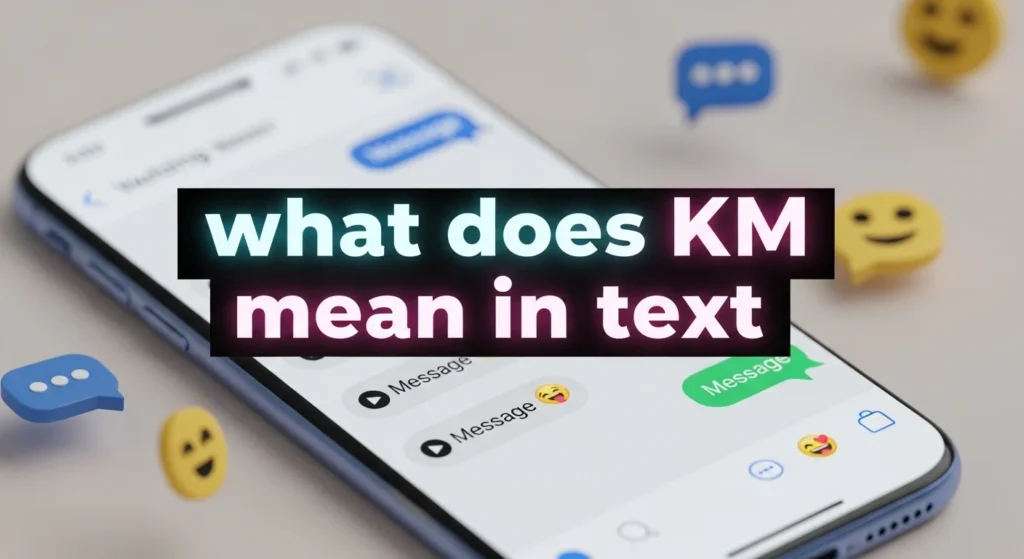
If you’ve ever paused mid-conversation after seeing “KM” in a message, you’re not alone. It’s one of those short, cryptic expressions that can feel obvious to the sender—but confusing to the reader.
People search for “what does km mean in text” because the meaning isn’t always straightforward. Unlike emojis or widely known abbreviations like “LOL,” “KM” can shift depending on tone, context, and even culture.
In this guide, I’ll walk you through not just what “KM” means, but how it actually feels in real conversations—because understanding tone matters just as much as understanding words.
KM – Quick Meaning
In texting and online communication, “KM” most commonly means:
- “Kill Me” (used humorously or dramatically, not literally)
What it usually expresses:
- Embarrassment
- Frustration
- Overwhelm
- Second-hand cringe
Examples:
- “I just waved back at someone who wasn’t waving at me… KM 😭”
- “Forgot my lines during the presentation. KM.”
- “My mom just read my messages out loud… KM”
It’s important to note: in most casual conversations, this is not serious or harmful—it’s exaggerated emotion.
Origin & Background
“KM” comes from the longer phrase “kill me,” which has been used for decades as a dramatic way to express embarrassment or frustration.
Where it started:
- Early internet forums and chat rooms
- SMS texting era where character limits mattered
- Youth culture that thrives on shorthand expression
Cultural influence:
The phrase gained traction as humor became more self-aware and ironic. People began exaggerating reactions to everyday situations, turning awkward moments into shared comedy.
Social media impact:
Platforms like TikTok, Instagram, and messaging apps accelerated its spread. The faster communication became, the shorter expressions needed to be.
Over time, “KM” evolved into a lightweight emotional shortcut—a way to say “this is painfully awkward” without writing a full sentence.
Real-Life Conversations
1. WhatsApp Chat
Person A: I just called my teacher “mom” in class today
Person B: Nooooo 😭
Person A: I wanted to disappear… KM
2. Instagram DMs
Person A: He liked my old photo from 2019
Person B: That’s either bold or accidental
Person A: I’m overthinking everything now… KM
3. TikTok Comments
User 1: When you trip in public and pretend nothing happened
User 2: KM this is literally me every day
4. Text Message
Person A: I sent the message to the wrong group
Person B: What did you send??
Person A: A rant about them… KM
These examples show how “KM” carries shared emotional understanding—it’s not about harm, it’s about relatable discomfort.
Emotional & Psychological Meaning
At its core, “KM” is about emotional exaggeration.
It reflects how people cope with:
- Awkward situations
- Social anxiety
- Embarrassment
- Minor life frustrations
Instead of saying, “I feel deeply embarrassed,” people say “KM” because it:
- Feels lighter
- Sounds more humorous
- Builds connection through shared experience
A personal-style scenario:
Imagine you’re in a group chat and you accidentally send a voice note complaining about someone… to that exact person. Your heart drops. You don’t want to explain everything.
So you type:
“KM.”
It captures the feeling instantly—no long explanation needed.
Usage in Different Contexts
Social Media
Used frequently in comments and captions:
- To react to relatable content
- To express second-hand embarrassment
Example: “This video is too real… KM”
Friends & Relationships
Among friends, it’s casual and understood:
- Signals vulnerability without being too serious
- Creates humor out of awkwardness
Work / Professional Settings
Best avoided.
Even if used jokingly, it can:
- Sound inappropriate
- Be misinterpreted as negative or unprofessional
Casual vs Serious Tone
- Casual: “KM 😂 that was embarrassing”
- Serious (rare): Could be misunderstood if tone isn’t clear
Context always matters.
When NOT to Use It
There are situations where “KM” can backfire.
Avoid using it:
- In professional emails or workplace chats
- When talking to someone unfamiliar with slang
- In serious emotional conversations
- Around people sensitive to language about harm
Cultural sensitivity:
In some cultures, expressions like “kill me” may feel uncomfortable or inappropriate—even when meant jokingly.
Risk of misunderstanding:
Without emojis or context, it may sound too literal.
Common Misunderstandings
1. Taking it literally
Some people think it expresses real distress. Most of the time, it doesn’t.
2. Tone confusion
“KM” without emojis can feel:
- Harsh
- Negative
- Emotionally heavy
3. Assuming everyone understands it
Not all age groups or cultures are familiar with this slang.
4. Mixing contexts
Using it in serious discussions can feel dismissive or insensitive.
Comparison Table
| Expression | Meaning | Tone | Usage Context |
| KM | Kill me (embarrassment/frustration) | Dramatic, humorous | Casual chats |
| LOL | Laugh out loud | Light, positive | Universal |
| SMH | Shaking my head | Disapproval | Casual/social |
| FML | Frustration with situation | Stronger, more negative | Informal |
| OMG | Surprise/shock | Emotional | Universal |
| “I’m fine” | Opposite tone (hiding feelings) | Reserved | Serious contexts |
Key Insight
“KM” sits in a unique space—it’s dramatic like “FML,” but usually lighter and more playful. Its meaning depends heavily on tone and relationship.
Variations / Types
Here are common variations you might see:
- KM 😭
Adds emotional intensity (crying humorously) - KM LOL
Softens the tone with humor - KM PLEASE
Emphasizes exaggerated frustration - KM RN
“Right now” — immediate reaction - KM BYE
Dramatic exit from conversation - KM THIS IS SO EMBARRASSING
More explicit emotional context - KM 💀
Indicates “I’m dead” humor (Gen Z style) - KM FR
“For real” — emphasizes sincerity - KM I CAN’T
Expresses overwhelm - KM STOP
Reaction to something too funny or awkward
How to Respond When Someone Uses It
Casual Replies
- “😂 what happened?”
- “Tell me everything”
Funny Replies
- “Survive. We need you.”
- “Too late, you’re famous now”
Mature Replies
- “Sounds like a rough moment. Want to talk?”
- “That happens to everyone, don’t stress”
Respectful Replies
- “I hope you’re okay”
- “Let me know if you need support”
Your response should match the tone—light if it’s humor, thoughtful if it feels deeper.
Regional & Cultural Usage
Western Culture
Common and widely understood, especially among younger users. Seen as humorous exaggeration.
Asian Culture
Usage varies. In some places, it’s used among younger groups but may feel too direct in formal settings.
Middle Eastern Culture
More cautious usage. Humor exists, but expressions involving harm may be less common in polite conversation.
Global Internet Usage
Thanks to social media, “KM” is recognized globally—but interpretation still depends on cultural sensitivity.
Generational Differences
- Gen Z: Uses it freely, often with emojis like 💀 or 😭
- Millennials: Understand it but may use it less frequently
- Older generations: May misinterpret or avoid it
Is It Safe for Kids?
Generally, yes—but with context.
Kids and teens often use “KM” in a non-serious, humorous way. However, it’s important they understand:
- The difference between exaggeration and real emotions
- When language might be inappropriate
Guidance, not restriction, works best here.
Discover More Post
- What Do OTP Mean In Text? The Two Powerful Meanings Most People Confuse
- What Does LY Mean In Text? The Simple Shortcut That Carries Real Emotion
- What Does “XXX” Mean In Text? The Real Meaning, Usage & Hidden Emotions Explained
- What Does “SP” Mean In Text? A Clear, Human Explanation You’ll Actually Understand
- What Does “DR” Mean In Text? A Clear, Real-Life Guide To Its Meaning And Use
FAQs
Does KM always mean “kill me”?
Yes, in texting it usually does—but it’s almost always used humorously.
Is KM dangerous or harmful language?
Not typically. It’s exaggerated slang, but context matters.
Can KM be used in formal conversations?
No, it’s best kept for casual chats.
Why do people use KM instead of full sentences?
It’s faster, expressive, and emotionally relatable.
Is KM the same as FML?
Similar, but KM is usually lighter and more playful.
Can KM be misunderstood?
Yes, especially without context or among different age groups.
Should I use KM in professional chats?
Avoid it. It may appear unprofessional or unclear.
Conclusion
“KM” is a perfect example of how modern communication compresses emotion into just two letters. It’s quick, expressive, and deeply tied to how people share awkward, funny, and frustrating moments.
Used correctly, it builds connection—it says, “I’ve been there too.”
But like all slang, its power lies in context. Knowing when to use it—and when not to—makes all the difference.
Once you understand the tone behind it, “KM” stops being confusing and starts feeling like a natural part of everyday conversation.