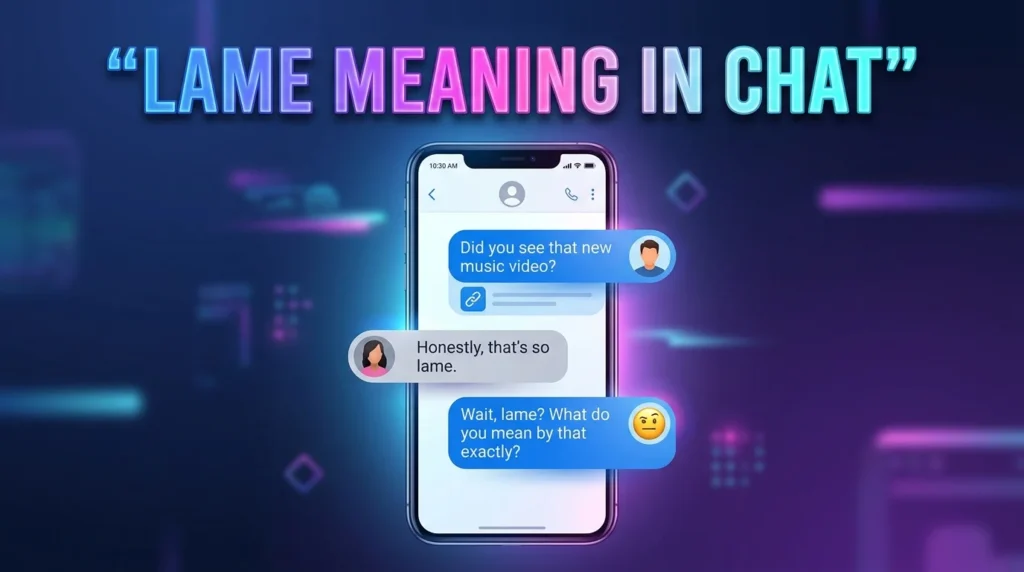
The phrase “lame meaning in chat” is one of those modern search queries that comes from real confusion in digital communication. People see the word lame in messages, comments, or replies and wonder whether it is rude, funny, or just casual slang.
In everyday online conversations, language changes quickly. A word that once had a simple dictionary meaning can now carry emotional tone, sarcasm, or even humor depending on context. That is exactly the case with lame.
Most people search this term because:
- They saw it in a WhatsApp or Instagram chat
- Someone called their idea or joke “lame”
- They are unsure if it is offensive or casual
- They want to reply correctly without misunderstanding
In modern English, especially in texting culture, lame is not always about physical ability. It is more about boring, weak, unoriginal, or disappointing behavior or ideas. But the tone can change everything.
Let’s break it down in a clear, real-world way.
lame meaning in chat
In chat language, “lame” usually means something is:
- Boring or uninteresting
- Not funny or weak attempt at humor
- Unimpressive or disappointing
- Cringe or outdated (in Gen Z slang)
Quick meaning examples:
- “That joke is so lame.” → not funny
- “Don’t be lame.” → don’t be boring or dull
- “Lame excuse.” → weak reason
In texting, tone matters a lot. It can sound playful between friends or slightly rude if used harshly.
Lame person meaning
A “lame person” in modern slang does NOT refer to physical disability in casual chat. Instead, it means:
- Someone who is socially boring
- A person who lacks energy or confidence
- Someone who is not fun to be around
Example:
- “He’s kinda lame, he never wants to go out.”
However, this usage can be sensitive. In respectful communication, it is better to avoid labeling people this way.
Lame meaning in chat in English
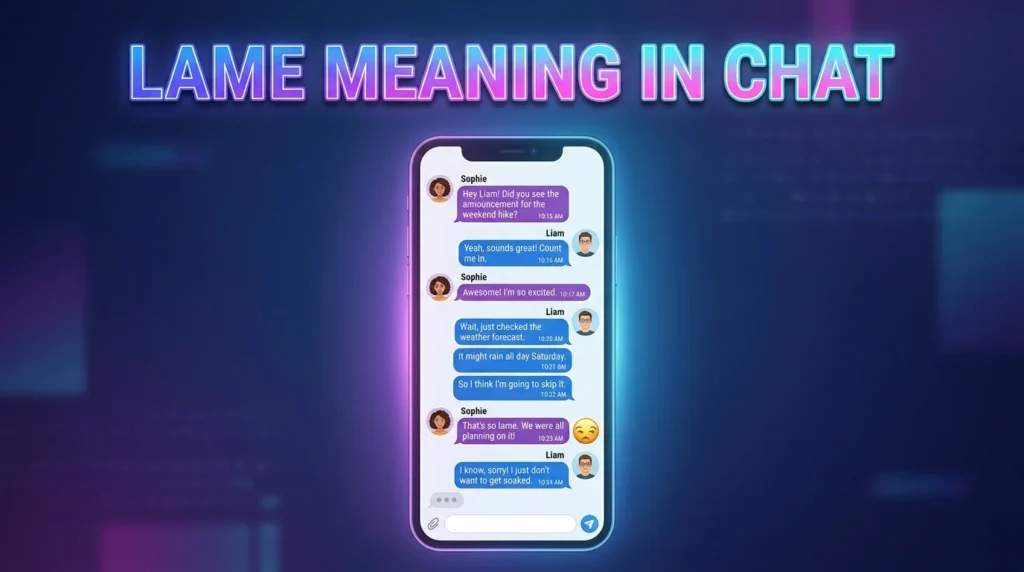
In simple English chat usage, lame describes:
- Weak effort
- Poor excuse
- Uninteresting content
- Lack of creativity
Examples:
- “That movie ending was lame.”
- “Your excuse sounds lame.”
It is commonly used in informal digital conversations rather than formal English.
A lame meaning
The phrase “a lame” depends on context:
- A lame joke → not funny joke
- A lame idea → weak idea
- A lame attempt → poor effort
It always acts as a negative qualifier, meaning something is below expectation.
Lame reason meaning
A lame reason refers to a justification that feels:
- Weak
- Unconvincing
- Made-up or lazy
Example:
- “He gave a lame reason for missing class.”
It often shows disbelief or frustration in conversation.
Lame reply meaning
A lame reply means:
- A boring response
- A short, uninterested answer
- A reply that doesn’t continue the conversation
Example:
- “K” or “ok” as a reply can sometimes be seen as lame in emotional chats
It often reflects lack of effort or engagement.
Lame behaviour meaning
Lame behavior refers to actions that are:
- Immature or childish
- Disrespectful in a subtle way
- Lacking confidence or effort
Example:
- “Ghosting someone is really lame behavior.”
It is often used in emotional or friendship-related conflicts.
Lame girl meaning
In informal slang, “lame girl” may refer to:
- A girl who is considered boring by peers
- Someone who avoids social activities
- A person seen as “not fun” in group settings
However, this term can be judgmental and should be used carefully. Modern communication encourages respectful language instead of labeling individuals.
Lame idea meaning
A lame idea means:
- An idea that lacks creativity
- Something not practical or interesting
- A weak suggestion
Example:
- “Going there without planning is a lame idea.”
Intermediate+ Word of the Day: lame
Word: Lame
Level: Intermediate+
Part of Speech: Adjective
Meaning:
- Not interesting or weak in quality (informal usage)
Usage in chat:
- “That’s so lame.”
- “Don’t be lame about it.”
Note:
In professional English, avoid slang usage in formal writing.
What do you mean when you call somebody a lame?
When someone calls a person “lame,” they usually mean:
- That the person is boring or unexciting
- That their behavior is not socially appealing
- That they lack confidence or effort
However, tone matters a lot. It can be:
- Playful among friends
- Offensive if said aggressively
- Misunderstood in cross-cultural communication
Discover and learn terms like lame:
Common English Slangs
- Basic – simple or boring
- Cringe – embarrassing or awkward
- Weak – not strong or impressive
- Mid – average or unimpressive
- Trash – very bad or low quality
Expressions with lame
Common expressions include:
- “That’s so lame”
- “Don’t be lame”
- “Lame excuse”
- “Lame joke”
- “Lame attempt”
Origin of lame
Originally, lame comes from Old English “lama”, meaning physically disabled or unable to walk properly.
Over time, especially in modern slang and internet culture, its meaning shifted from physical limitation to emotional or quality-based judgment like boring or weak.
Social media platforms like TikTok, Twitter (X), and Instagram helped spread this modern informal usage globally.
Terms related to lame
- boring
- dull
- weak
- uncool
- unimpressive
- outdated
- unfunny
- lazy (in effort context)
Terms with lame included in their meaning
- Lame joke
- Lame excuse
- Lame idea
- Lame behavior
- Lame attempt
- Lame reply
- Lame person
- Lame reason
Examples of lame in a sentence
- “That party was kind of lame.”
- “Stop giving lame excuses.”
- “His joke was so lame nobody laughed.”
- “She called my idea lame, but I think it’s good.”
View all translations of lame
In other languages, lame often translates to:
- Spanish: “aburrido” (boring)
- French: “nul” (bad/weak)
- Urdu: “boring / kamzor” (context-based)
- Arabic: “ممل” (boring)
Meaning changes slightly depending on cultural tone.
Emotional & Psychological Meaning
When someone uses the word lame, it often reflects:
- Mild frustration
- Disappointment
- Playful teasing
- Social judgment about effort or creativity
In real communication, people rarely think deeply before using it. It becomes a quick emotional reaction word.
Scenario example:
A friend cancels plans last minute with a weak excuse. You reply, “That’s lame.”
It expresses disappointment, not deep anger.
Usage in Different Contexts
- Social media: casual judgment or humor
- Friends: playful teasing
- Work: avoid (can sound unprofessional)
- Serious talk: avoid due to negative tone
When NOT to Use It
Avoid using “lame” when:
- Talking to strangers
- In professional emails
- With sensitive topics
- Referring to physical disability (offensive context)
Common Misunderstandings
- People think it only means “disabled” (old meaning)
- Some assume it is always rude
- Others use it too casually without understanding tone
Comparison Table
| lame mean in text | weak, boring, or unimpressive expression |
| How to Use lame | informal slang in chats and comments |
| Examples of lame | “lame joke”, “lame excuse” |
| lame vs boring | “lame” is stronger and more judgmental |
Key Insight:
“Lame” is highly context-driven; tone decides whether it feels playful or offensive.
Variations / Types
- lame joke meaning → not funny joke
- lame idea meaning → weak suggestion
- lame excuse meaning → unconvincing reason
- lame reply meaning → boring response
- lame behavior meaning → immature actions
- lame person meaning → socially boring individual
- lame reason meaning → weak justification
- lame in chat meaning → informal slang for boring/unimpressive
- lame slang meaning → casual internet insult or joke
- lame meaning in text → shorthand criticism of quality
How to Respond When Someone Uses It
Casual replies:
- “Haha maybe, I’ll fix it 😄”
- “Fair enough!”
Funny replies:
- “Lame? Wait till next time 😎”
- “Ouch, that hurt a little!”
Mature replies:
- “Got it, I’ll improve it.”
Respectful replies:
- “I understand your point.”
Regional & Cultural Usage
- Western culture: common slang, often playful
- Asian culture: less common, may sound rude
- Middle Eastern culture: usually avoided in formal talk
- Gen Z internet: widely used in memes and comments
- Millennials: used but more carefully
Is It Safe for Kids?
Yes, but context matters.
It is mild slang, but children should learn when not to use judgmental words about people.
FAQs
What does lame mean in chat?
It means boring, weak, or uninteresting in informal messages.
Is lame a rude word?
It can be mild or rude depending on tone.
What is a lame joke?
A joke that is not funny or poorly delivered.
Can I use lame in formal writing?
No, it is informal slang.
What is lame behavior?
Immature or unimpressive actions.
Is calling someone lame offensive?
It can be offensive depending on context.
What is a lame excuse?
A weak or unconvincing reason.
Conclusion
The word lame may look simple, but its meaning in chat is shaped entirely by context, tone, and relationship. In modern digital communication, it has become a quick way to express disappointment, humor, or judgment.
Understanding how and when to use it helps you avoid misunderstandings and communicate more naturally in online conversations. Like many slang words, its power lies not in the word itself—but in how you say it.