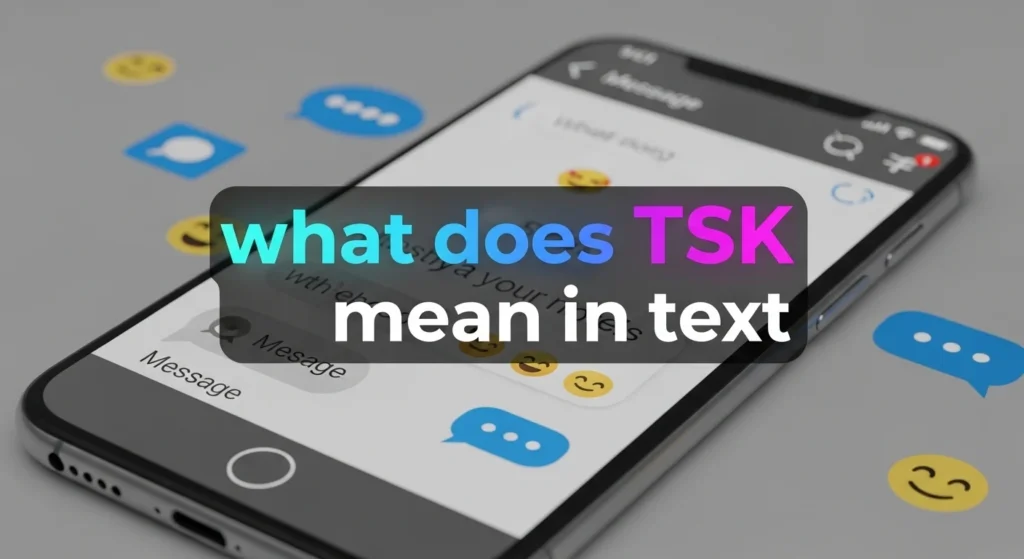
If someone has ever replied to your message with just “tsk” and left you wondering whether they were joking, annoyed, disappointed, or teasing—you are not alone.
In digital conversations, short expressions often carry emotional weight far beyond their size. “TSK” is one of those small text reactions that can mean many things depending on tone, context, and relationship between speakers.
People search for “what does tsk mean in text” because it is not always obvious whether it is playful sarcasm, mild disapproval, affectionate teasing, or genuine frustration. Unlike clearer abbreviations such as LOL or BRB, TSK depends heavily on emotional nuance.
Understanding how TSK works can help you avoid awkward misunderstandings and read between the lines of modern online communication with much more confidence.
TSK – Quick Meaning
In texting, TSK represents the written version of the “tsk tsk” sound people make with their tongue, often to express:
- Mild disapproval
- Disappointment
- Playful criticism
- Sarcastic teasing
- Light frustration
It mimics the real-life clicking sound someone makes when reacting to foolish, careless, or amusing behavior.
Examples:
- “You forgot your anniversary? Tsk.”
- “Tsk, I expected better from you.”
- “You ate the last slice without asking? tsk tsk.”
Unlike harsh criticism, TSK is often softer and emotionally layered.
Origin & Background
TSK did not begin as internet slang.
Its roots go back to spoken human behavior long before texting existed. The tongue-clicking “tsk” sound has been used in many cultures for centuries as a nonverbal reaction to disappointment or disapproval.
In written English, “tsk” appeared in literature as a way to imitate sound. Authors often used it in dialogue to show a character reacting silently but expressively.
Example in old writing: “Tsk, child, you should know better.”
As messaging moved online, this spoken sound became text shorthand.
Social media helped TSK evolve:
- In early chat rooms, it appeared in roleplay and casual banter
- On texting apps, it became a compact emotional response
- On TikTok and Instagram, it now often carries humorous irony
Today, TSK functions as emotional punctuation in digital speech.
Real-Life Conversations
WhatsApp Chat
Person A: I forgot to submit the assignment again.
Person B: Tsk… you really need reminders.
Instagram DM
Person A: I texted my ex after midnight.
Person B: Tsk tsk, bad idea and you know it.
TikTok Comments
Person A: I bought another pair of shoes I don’t need.
Person B: Tsk no self-control at all 😂
Text Message
Person A: I spilled coffee on my laptop this morning.
Person B: Tsk. That’s the third accident this month.
These examples show how TSK often mixes judgment with humor or affection.
Emotional & Psychological Meaning
TSK is fascinating because it often says more through tone than through words.
Emotionally, it may express:
- Gentle disappointment
- Mock criticism
- Loving correction
- Silent disbelief
Unlike angry messages, TSK softens criticism. It allows people to communicate disapproval without escalating tension.
In real life, I have seen close friends use TSK in ways that actually strengthen intimacy. A friend once texted me, “Tsk, you skipped breakfast again?” It sounded caring, not harsh. The message carried concern wrapped inside playful scolding.
That emotional layering is why TSK remains powerful despite being so short.
Usage in Different Contexts
Social Media
On platforms like TikTok, X, and Instagram, TSK is often used in:
- Meme reactions
- Playful call-outs
- Sarcastic commentary
Example: “Tsk, people still believe clickbait headlines?”
Friends & Relationships
Among friends, TSK is common and often affectionate.
Example: “Tsk, you always fall for bad boys.”
In romantic relationships, it may sound teasing or flirtatious depending on tone.
Work / Professional Settings
In professional environments, TSK is risky.
Avoid using it in:
- Emails
- Client communication
- Formal workplace chats
It may sound passive-aggressive or disrespectful.
Casual vs Serious Tone
Casual: “Tsk, caught you stealing fries again.”
Serious: “Tsk, that decision caused real problems.”
Tone changes everything.
When NOT to Use It
TSK should be avoided when emotional clarity matters.
Do not use it:
- In grief-related conversations
- During serious arguments
- In professional conflict discussions
- With strangers unfamiliar with your tone
- Across cultures where the expression may be misunderstood
Example: “I lost my grandfather today.” Responding with “tsk” would feel insensitive and cold.
Common Misunderstandings
1. People Think It Means Anger
TSK is not always harsh. Often it is playful.
2. It Gets Mistaken for Mockery
Without context, some readers may feel insulted.
3. Literal vs Figurative Confusion
TSK is rarely literal sound imitation alone—it carries emotional meaning.
4. Some Think It Is Just Random Letters
New internet users may not realize it reflects a spoken expression.
Because text lacks vocal tone, misunderstanding happens easily.
Comparison Table
| Expression | Meaning | Tone |
| TSK | Mild disapproval or teasing criticism | Gentle / sarcastic |
| SMH | Shaking my head | Disappointed disbelief |
| Sigh | Frustration or tiredness | Emotional exhaustion |
| Wow | Surprise reaction | Neutral to dramatic |
| LOL | Humor or amusement | Lighthearted |
| Oops | Admitting mistake | Self-aware / apologetic |
Key Insight
TSK is unique because it mimics human sound rather than shortening words. That makes it feel more emotional, personal, and socially nuanced than many standard abbreviations.
Variations / Types
- Tsk tsk – Stronger disapproval; classic repeated form.
- tsk… – Suggests disappointment with pause.
- Tsk lol – Criticism softened with humor.
- Tsk wow – Adds disbelief.
- Tsk bro – Casual teasing among friends.
- Tsk seriously? – Sharper frustration.
- Tsk haha – Mock scolding in playful tone.
- Big tsk – Stronger emotional reaction.
- nah tsk – Rejecting foolish behavior.
- just tsk – Quiet disappointment without elaboration.
How to Respond When Someone Uses It
Casual Replies
- “Okay, fair enough.”
- “I know, I messed up.”
Funny Replies
- “Judge me later, I’m still recovering.”
- “I regret nothing.”
Mature Replies
- “You’re right, that was careless.”
- “Point taken—I’ll handle it better.”
Respectful Replies
- “I understand your reaction.”
- “That’s fair criticism.”
Regional & Cultural Usage
Western Culture
In Western texting culture, TSK is widely understood as playful or mildly disapproving.
Asian Culture
In many Asian online spaces, English slang users recognize TSK, though younger generations use it more than older ones.
Middle Eastern Culture
TSK appears mainly in English-based chats and mixed-language texting, especially among bilingual youth.
Global Internet Usage
Gaming communities, meme culture, and fandom groups use TSK internationally as expressive shorthand.
Generational Differences
Gen Z: Often uses TSK ironically or humorously in memes.
Millennials: Tend to use it in more direct conversational contexts.
Gen Z may exaggerate it for comedic effect.
Is It Safe for Kids?
Yes, TSK is generally safe for kids.
It is not vulgar or explicit. However, children should understand:
- It can sound rude in the wrong context
- Tone matters when using it with teachers or adults
Like many slang expressions, appropriateness depends on audience.
Discover More Post
- PMO Mean In Text: What It Really Means (And Why It Can Be Misunderstood)
- What Is OTP Mean In Text? The Real Meaning, Usage & Hidden Emotions Behind It
- What Does MF Mean In Text? The Real Meaning, Tone, And When To Use It
- What Does WYM Mean In Text? A Simple Phrase That Says More Than You Think
- What Does SHM Mean In Text? The Real Meaning Behind This Popular Slang
FAQs
What does TSK mean in text from a girl?
Usually mild teasing, disappointment, or playful disapproval—context matters more than gender.
Is TSK rude?
Not necessarily. It can sound rude if used sarcastically or harshly.
What is the difference between TSK and SMH?
TSK sounds more personal and conversational; SMH feels more detached.
Does TSK mean anger?
Usually no. It often signals mild frustration rather than real anger.
Why do people type TSK instead of words?
Because it conveys emotion quickly and mimics real human speech naturally.
Can I use TSK in formal writing?
No, it is best kept for informal digital communication.
Is TSK common on TikTok?
Yes, especially in sarcastic reactions and playful comment threads.
Conclusion
So, what does TSK mean in text?
At its heart, TSK is a written emotional sound—a tiny expression that communicates disappointment, teasing criticism, sarcasm, or affectionate correction in just three letters.
Its charm lies in its humanity. Unlike many abbreviations, TSK feels alive because it imitates a real-world sound people have made for generations.
Once you understand its emotional nuance, you can recognize when it is playful, when it is serious, and when it is better left unsent.
Used thoughtfully, TSK adds tone, personality, and emotional texture to digital conversations.